
Why does Real Madrid wear white?
"The Real Madrid shirt may be stained with mud, sweat, or even blood, but it must never be stained with shame." This legendary declaration by Santiago Bernabéu, perhaps the greatest president in the club's history, has become the sacred principle for every player privileged enough to represent the Royal Club.
On any prestigious stage, from the domestic league to the peak of continental football, the white of Real Madrid commands absolute respect, casting a shadow over all other colors through unparalleled records. However, while it is the dream of millions of children worldwide, the adoption of this color was surprisingly natural, accidental, and was not even the club's original traditional look.
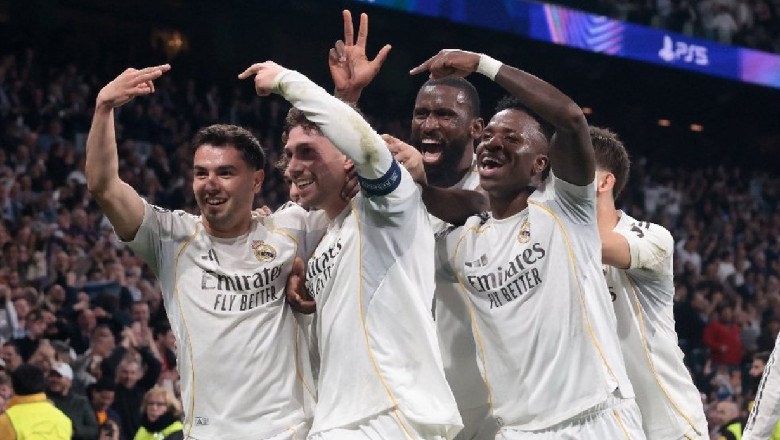
Livescore invites you to explore the answer to the question, "Why does Real Madrid wear white?" as we delve into the epic history that created the famous "Los Blancos" trademark.
Why does Real Madrid wear white?
The most successful club in football history was officially born on March 6, 1902, when Madrid Football Club was founded by a group of enthusiasts, including the Palacios brothers and Juan Padrós. Juan Padrós, a businessman from Catalonia, became the first official president. Interestingly, the club’s initial identity was heavily influenced by Arthur Johnson, a Dublin-born player and the club's first coach.
Johnson was a visionary who sought to instill a sense of order and prestige into the fledgling side. Although the club is now inseparable from its all-white look, the very first matches actually saw the players wearing a white shirt with a dark sash and dark trousers, a far cry from the sleek, monochromatic aesthetic we see today.
The most prominent theory regarding the transition to an all-white kit involves a fascination with English football. During the early 1900s, Corinthian FC of London was the epitome of "gentlemanly" football, renowned for their incredible skill and fair play. They were so dominant that they once thrashed Manchester United 11-3, a result that remains the Red Devils' heaviest defeat.
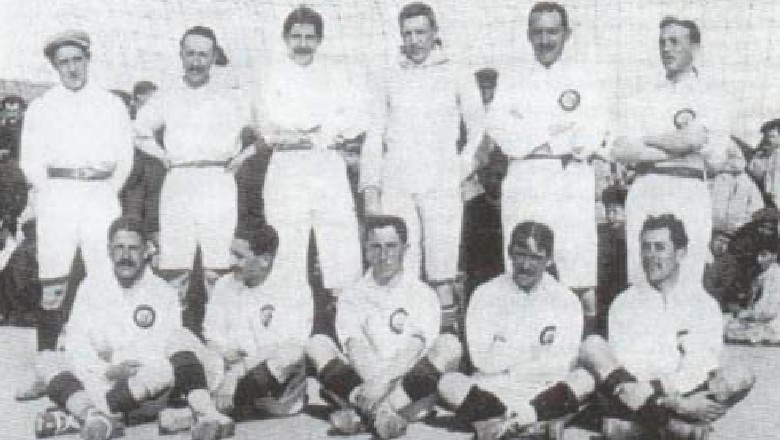
Johnson, having observed the Corinthians' elegance and their distinctive white shirts at The Oval in London, was deeply inspired. He believed that by adopting their colors, Madrid could emulate their values and swagger. Consequently, the club ditched the sashes and adopted the all-white shirt, shorts, and socks, birthing the "Los Blancos" identity.
Another practical theory suggests that in the early days, teams simply played in their white undershirts and long johns, as the more established side in the city, Madrid claimed the pure white look, forcing opponents to wear sashes to differentiate themselves.
Throughout the decades, the white kit became a symbol of European dominance. In 1920, King Alfonso XIII granted the club royal patronage, changing the name to "Real Madrid" and adding the crown to the crest. Under the guidance of legendary figures and players like Alfredo Di Stéfano and Ferenc Puskás, and later under the tactical brilliance of managers such as Miguel Muñoz, the white shirt became a "bad omen" for rivals.
This era saw the club achieve the unprecedented feat of winning 5 consecutive European Cups from 1956 to 1960. Di Stéfano, a titan who played 396 matches and scored 308 goals, embodied the "meringue" style, sweet to watch but lethal in execution. This period cemented the nickname "Los Merengues," coined by a radio commentator who likened the pristine white kits to the popular dessert.
However, the tradition was nearly broken in 1925. Players Felix Quesada and Perico Escobal, after a trip to England, convinced President Pedro Parages to switch to black shorts to further honor Corinthian FC.
The experiment was a disaster. Real Madrid suffered a humiliating 5-1 defeat at home and a 2-0 defeat away to their arch-rivals, Barcelona, in the Copa del Rey. President Parages, viewing the deviation as a curse, famously declared that the club must return to all-white immediately, stating that any other color was a "bad omen."
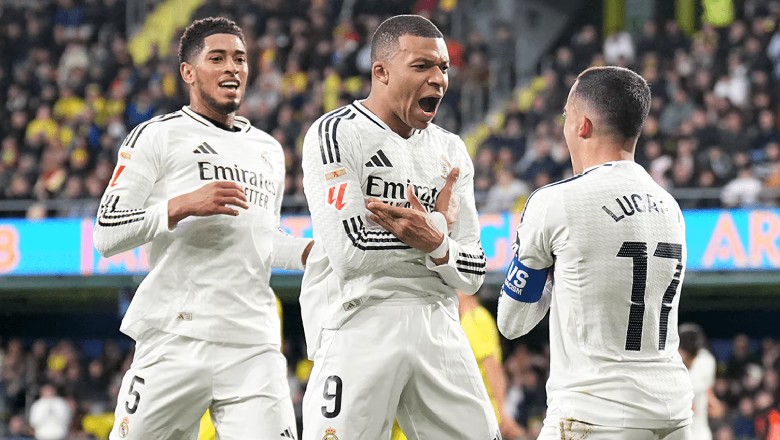
Since that fateful season, the club has never looked back, winning 15 Champions League titles, 13 of which were secured while wearing the traditional white. From the "Galacticos" era featuring Zidane and Ronaldo to the modern dominance of Cristiano Ronaldo, who scored a staggering 450 goals in 438 games, the white kit has remained the constant variable in an ever-changing sport.
Summary of Real Madrid's traditional kit colors:
1902: Founding era with white shirts, dark sashes, and dark trousers.
1902-1925: Transition to all-white (shirt, shorts, socks) inspired by Corinthian and the "undershirt" theory.
1925: Brief, unsuccessful experiment with black shorts as a tribute to English elegance.
1926-present: Return to the iconic all-white "Los Blancos" look, solidified by the decree of Pedro Parages.
Livescorecz.net has provided the comprehensive answer to the question: "Why does Real Madrid wear white?" What began as a momentary inspiration from an English amateur side has transformed into over a century of legendary history. The white color arrived at the Santiago Bernabéu naturally, but it stayed to fight, conquer, and eventually become an irreplaceable image of footballing excellence.
Visit our homepage to read more fascinating statistical articles and hidden stories from the world of football history. Beyond our deep-dive features, we are confident in providing you with the highest quality experience through our diverse, rapid, and up-to-date statistical platform covering every football match on the planet. Additionally, we continuously update the hottest news and match schedules for all the world's leading national championships.
The Most Popular
-
 How many games are there in a Serie A season?
 -
 Why football is not popular in India?
 -
 Ranking Portugal's biggest defeats in football history: A 10-goal disaster in Lisbon, the day Muller ‘humiliated’ Pepe
 -
 Ranking the best players of the 21st century football: Shock over Ibrahimović’s position, Messi’s place is unquestionable
 -
 5 players who played for Real Madrid and Man City: Including Champions League hunters and Etihad history makers
 -
 Is Ronaldo a winger or striker?
 -
 Spain national team squad for the 2026 World Cup predicted: Do Carvajal and Williams still deserve?
 -
 Why did Ibrahimovic leave Barcelona?
 -
 How much did Arsenal pay for Odegaard?
 -
 How much did PSG pay for Ousmane Dembele?