
What is the Juventus logo's meaning?
To understand the Juventus logo's meaning, one must travel back to the autumn of 1897. On a humble bench in Turin, 13 students from the D’Azeglio Lyceum School founded what would become a global powerhouse. Interestingly, their first "headquarters" was a bicycle repair shop owned by Eugenio Campari, who became the club's first president. In its infancy,
Juventus didn't wear the iconic stripes, they actually played in pink shirts with black ties. However, since their official debut in the Italian Football Championship on March 11, 1900, the club has evolved through 127 years of history, becoming the only team to win all major confederation trophies by 2022.
Throughout this journey, the club has undergone 10 major logo transformations. While the visual identity shifted from ornate heraldry to the current "J" lettermark, the core objective remained constant: representing the strength of Turin and the ambition of the Agnelli family, who have steered the club since 1923.
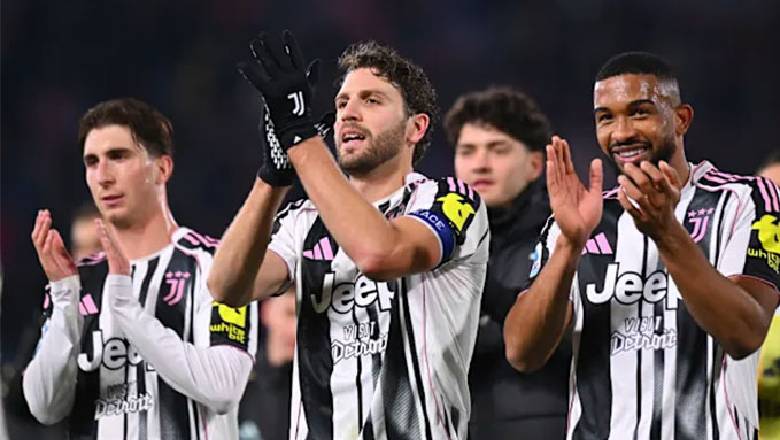
For the first time in history, the recent shift to a minimalist style by the leaders at the Allianz Stadium is not merely a commercial move. It is a calculated message to global fans, blending tradition with a futuristic lifestyle. This comprehensive guide from Livescorecz will dive deep into the Juventus logo meaning across different eras.
What is the Juventus logo’s meaning?
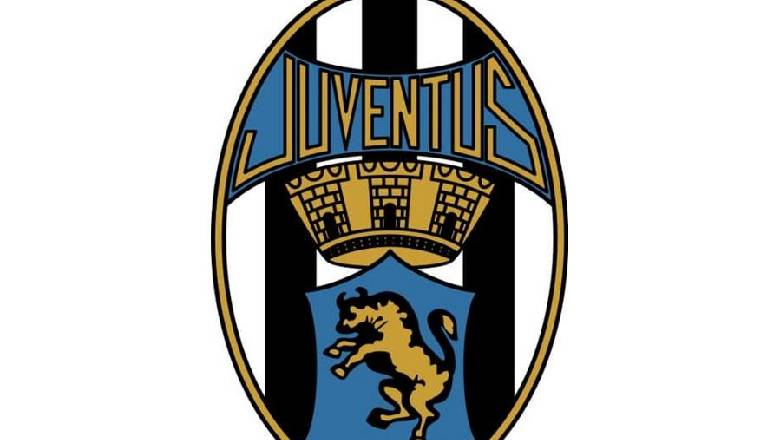
The evolution begins with the Original Badge (1905-1921). This inaugural design was an ornate, oval-shaped crest featuring heavy vertical stripes. At its heart sat a small shield containing a black bull, the symbol of Turin, and a white crown. Above the oval, a ribbon displayed a Latin proverb: "Non coronabitur nisi qui legitime certaverit" (Only those who play by the rules will receive the crown). During this era, Juventus secured their first league title in 1905, establishing a philosophy of "winning through integrity."
As the "Roaring Twenties" arrived, the 1921-1929 Redesign introduced a splash of color. The club integrated blue and gold into the monochromatic scheme, inspired by the Turin coat of arms. Gold outlines surrounded the stripes, while the bull crest turned blue.
This era saw the start of the Agnelli era (1923), transforming Juve into a structured professional unit. Under the leadership of Edoardo Agnelli, the team began to dominate, reflecting the "gold" standard of excellence promised by the logo’s new palette.
Perhaps the most unique chapter occurred during the Zebra Era (1929-1931). In a bold departure, the club replaced the bull with a standing zebra. This was a literal translation of their nickname, "Le Zebre," emphasizing the black-and-white stripes that had become their permanent skin. Although short-lived, this playful design coincided with the beginning of the "Quinquennio d'Oro" (The Golden 5 Years), where Juve won 5 consecutive Scudettos. Legendary figures like Raimundo Orsi and Giuseppe Meazza (for Italy) defined this era of technical brilliance and "Metodo" tactics.
Moving into the mid-century, the Long-Standing Classic (1931-1977) returned to the oval crest but with refined, sharper contours. This logo witnessed the legendary "Magical Trio" of John Charles, Omar Sívori, and Giampiero Boniperti.
The Juventus logo’s meaning here was tied to absolute domestic hegemony. In the 1957/58 season, Juve earned their first Golden Star for winning ten league titles. The team was characterized by a physical, gritty style that mirrored the industrial growth of Turin.
A radical aesthetic shift occurred in the 1977-1989 "Blurred Zebra" Period. Designed by the legendary branding agency Interbrand, this logo featured a stylized, striped silhouette of a zebra (often mistaken for a horse). This was the era of Giovanni Trapattoni, arguably the most successful period in the club's history.
Fielding icons like Michel Platini and Gaetano Scirea, Juve played a "Zona Mista" style, a lethal blend of Catenaccio defense and creative flair. Platini, the three-time Ballon d'Or winner, spearheaded the 1983/84 and 1984/85 campaigns where Juve won the Cup Winners' Cup and the European Cup, boasting a win rate that cemented them as the world's best.
Returning to tradition, the 1989-2004 Badge simplified the 1920s look, removing the blue and focusing on gold and black. This logo sat on the chests of Alessandro Del Piero and Zinedine Zidane. Under Marcello Lippi, Juventus reached 3 consecutive Champions League finals (1996-1998), winning in '96. The "spirit of the logo" was defined by Lippi’s philosophy of "sacrifice and intelligence," where every player functioned as part of a relentless machine.
The 3D Modernization (2004-2017) added a metallic sheen and a yellow underline. It survived the dark days of Calciopoli and led the rebirth at the new Juventus Stadium. Players like Gianluigi Buffon and Giorgio Chiellini embodied the "Fino alla Fine" (Until the end) spirit, setting a record of nine consecutive Serie A titles.
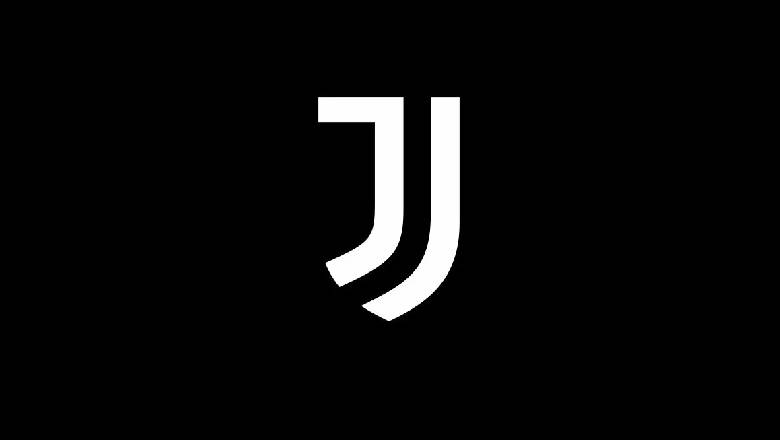
Finally, the 2017-Present "J" Lettermark was unveiled. This masterpiece of modern branding strips everything away to focus on three elements: the "J," the stripes, and the Scudetto shape. It signals Juventus's transition into a luxury brand, a move that transcends football to influence fashion and art.
Summary of Juventus logo iterations:
1905-1921: Ornate oval with Latin motto and Turin bull.
1921-1929: Addition of blue and gold from the city's coat of arms.
1929-1931: The playful standing "Zebra" mascot.
1931-1977: Refined oval crest.
1977-1989: The "Blurred Zebra" silhouette.
1989-2004: Return to traditional heraldry with gold accents.
2004-2017: Contemporary 3D badge with a yellow arc.
2017-present: Minimalist "J" lettermark.
This retrospective by Livescorescz.net has explored the intricate Juventus logo meaning through every historical shift. When you hear the name Bianconeri, which of these iconic symbols immediately enters your mind? Does the classic oval of the 90s resonate more, or does the sharp, futuristic "J" capture your imagination?
Beyond these fascinating historical deep dives, our website is dedicated to providing you with the ultimate football experience. We offer much more than just stories; we provide real-time updates, multi-dimensional analytical articles, and comprehensive pre-match and post-match statistics.
For fans of clubs like Juventus, you can stay ahead of the game with our detailed match schedules, up-to-the-minute squad news, and objective evaluations from leading football experts. Whether it's the Champions League or Serie A, we ensure you never miss a heartbeat of the beautiful game.
The Most Popular
-
 How many games are there in a Serie A season?
 -
 Why football is not popular in India?
 -
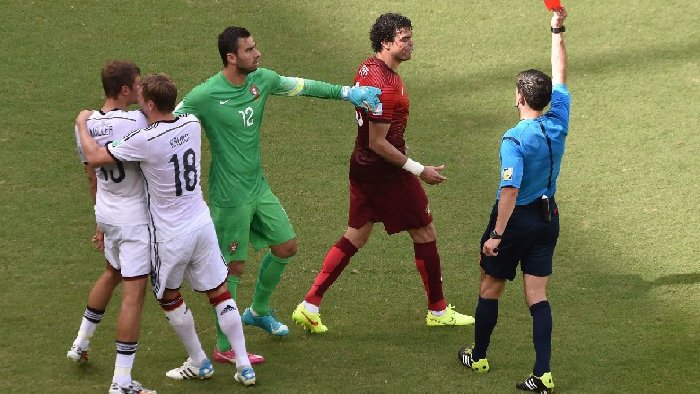 Ranking Portugal's biggest defeats in football history: A 10-goal disaster in Lisbon, the day Muller ‘humiliated’ Pepe
 -
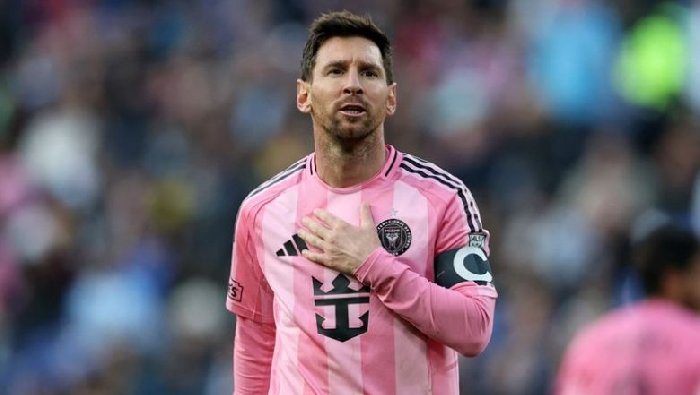 Ranking the best players of the 21st century football: Shock over Ibrahimović’s position, Messi’s place is unquestionable
 -
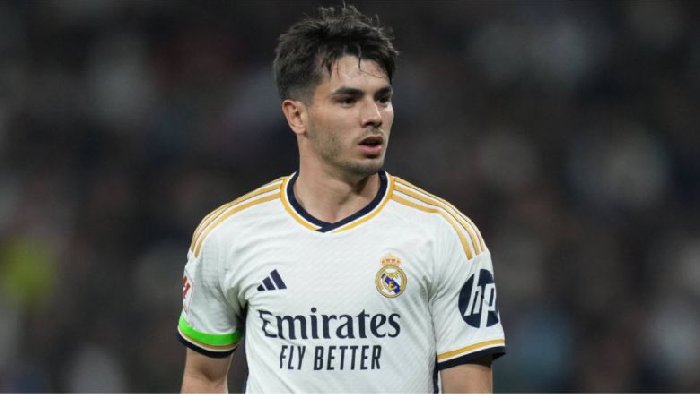 5 players who played for Real Madrid and Man City: Including Champions League hunters and Etihad history makers
 -
 Is Ronaldo a winger or striker?
 -
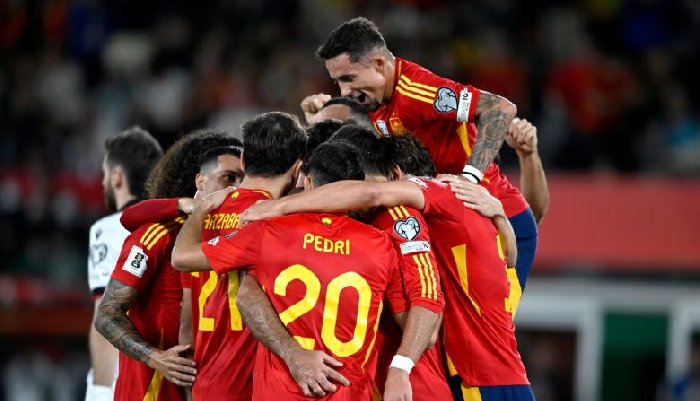 Spain national team squad for the 2026 World Cup predicted: Do Carvajal and Williams still deserve?
 -
 Why did Ibrahimovic leave Barcelona?
 -
 How much did Arsenal pay for Odegaard?
 -
 How much did PSG pay for Ousmane Dembele?