
How much money does Bundesliga winner get?
Critics often dismiss the Bundesliga as a "one-team race" due to the historical dominance of Bayern Munich, a factor that supposedly erodes the league’s unpredictability before a ball is even kicked. However, such a narrow view ignores the league's unique magnetic pull.
With world-class stars and a reputation as the premier cradle for global wonderkids, the Bundesliga captivates audiences through its unparalleled stadium atmosphere and passionate fan culture. Consequently, the German top flight maintains its status among the world's elite leagues, securing lucrative commercial and broadcasting deals that continuously elevate the annual prize pot.
To understand the financial rewards of reaching the pinnacle of German football, Livescorecz provides an in-depth analysis to answer the burning question: How much money does Bundesliga winner get?
How much money does Bundesliga winner get?
For the upcoming 2025/29 cycle, the DFL (German Football League) has successfully negotiated domestic media rights worth approximately €4.484 billion. This represents a 2% increase over the previous period, translating to roughly €1.121 billion per season. When factoring in an estimated €215 million per season from international rights, the total annual distribution pool reaches a staggering €1.336 billion.
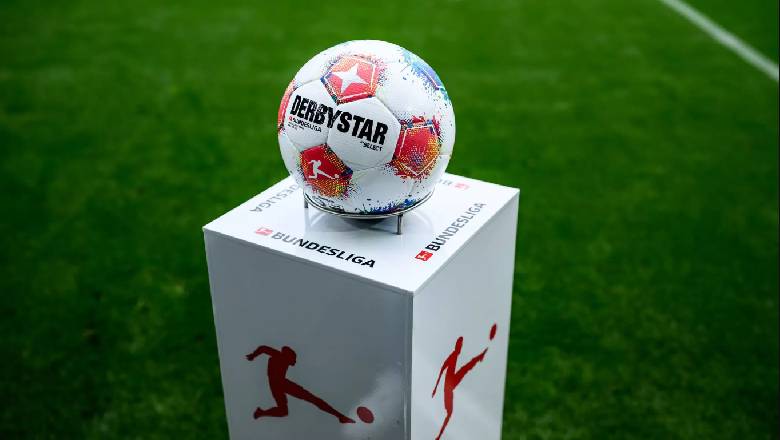
This growth is a testament to the league's resilience in a volatile market. Compared to other "Big 5" leagues, the Bundesliga’s domestic revenue sits comfortably ahead of France's Ligue 1 and Italy's Serie A, though it still trails the English Premier League’s astronomical €1.9 billion annual domestic intake. While the Premier League is a financial behemoth, the Bundesliga’s streamlined distribution model ensures its champions and mid-table clubs remain highly competitive.
The mechanism for sharing this wealth is governed by a sophisticated "4-Pillar" system. The first pillar, "Equal distribution," accounts for 50% of the domestic revenue, ensuring every top-flight club receives a baseline of approximately €26 million. This foundational support provides vital stability for smaller clubs.
The second pillar, "Sporting performance," comprises 43% of the funds and is calculated based on a five-year weighted ranking. This means a club’s consistency over half a decade dictates a significant portion of its income. The third pillar, "Youth development" (4%), rewards clubs for giving minutes to German U23 players and investing in academies. Finally, the "Popularity and interest" pillar (3%) utilizes TV ratings and fan engagement metrics to reward clubs that drive the league's commercial value.
Under this revamped model for the 2025/26 season, the projected total earnings for the Bundesliga champion are immense. Taking Bayern Munich as a practical example based on recent standings, the club is expected to haul in approximately €107.2 million in total prize money. This figure is composed of €83.4 million from domestic rights and an additional €23.8 million from the international market pool.
In contrast, a mid-table mainstay like Eintracht Frankfurt would earn roughly €89.4 million, while a newly promoted side or a lower-ranked team like Hamburger SV would still secure a respectable €40.3 million.
This progressive system differs significantly from the Premier League’s "equal share" heavy model or La Liga’s heavy weighting toward the top 2 giants, the German approach balances meritocracy with a social safety net, though the inclusion of youth and engagement metrics adds a modern, performance-based twist.
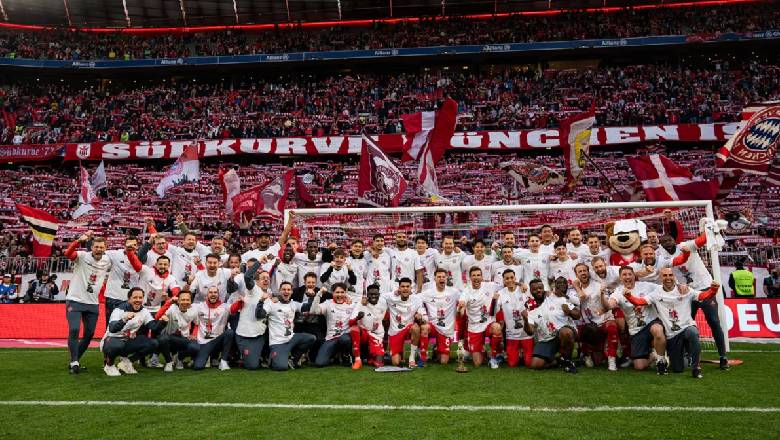
When we look at the broader German domestic landscape, the financial incentives extend beyond the league. The DFB-Pokal (German Cup) offers a separate, lucrative stream. While the winner of the Bundesliga enjoys the largest single payout, a champion who also triumphs in the DFB-Pokal can add approximately €10 million to €15 million in cumulative prize money through various rounds.
Furthermore, the DFL-Supercup provides a smaller but notable bonus of roughly €2 million for the winner. If a dominant club were to achieve a domestic "Treble" (Bundesliga, DFB-Pokal, and Supercup) while maximizing all variable factors, such as high TV viewership and peak youth integration, they could potentially clear over €125 million in domestic prize money alone.
Key takeaways of the Bundesliga revenue distribution system:
Total revenue pool: Approximately €1.336 billion per season for the 2025-2029 cycle.
Domestic rights: €1.121 billion annually, distributed via a 50-43-4-3 percentage split across 4 pillars.
International rights: €215 million annually, heavily weighted toward clubs with long-term European success.
Solidarity mechanism: Every Bundesliga club starts with a fixed €26 million base, ensuring financial survival for smaller teams.
Youth focus: 4% of the total pot is specifically tied to U23 player minutes and academy investments.
Engagement rewards: A dedicated 3% rewards clubs based on TV ratings and fan interaction, acknowledging market value.
The "winner's fortune": A champion like Bayern Munich can expect to earn over €107 million from league rights alone.
Through this comprehensive breakdown, Livescorecz.net has answered the question of how much money does Bundesliga winner get? While it may not always be labeled the "most exciting" league by every metric, German football leaders have masterfully ensured the Bundesliga maintains a rock-solid global standing and delivers impressive financial returns.
We invite you to save Livescorecz.net to your list of favorite sports websites to easily follow similar deep-dive topics in the future. Beyond financial analysis, we provide an entirely new sports experience by continuously updating the latest news on players, coaches, and teams across all major leagues. From objective pre-match previews to insightful post-match reviews and rare statistical data you won't find anywhere else, we are your definitive source for the beautiful game.
The Most Popular
-
 How many games are there in a Serie A season?
 -
 Why football is not popular in India?
 -
 Ranking Portugal's biggest defeats in football history: A 10-goal disaster in Lisbon, the day Muller ‘humiliated’ Pepe
 -
 Ranking the best players of the 21st century football: Shock over Ibrahimović’s position, Messi’s place is unquestionable
 -
 5 players who played for Real Madrid and Man City: Including Champions League hunters and Etihad history makers
 -
 Is Ronaldo a winger or striker?
 -
 Spain national team squad for the 2026 World Cup predicted: Do Carvajal and Williams still deserve?
 -
 Why did Ibrahimovic leave Barcelona?
 -
 How much did Arsenal pay for Odegaard?
 -
 How much did PSG pay for Ousmane Dembele?